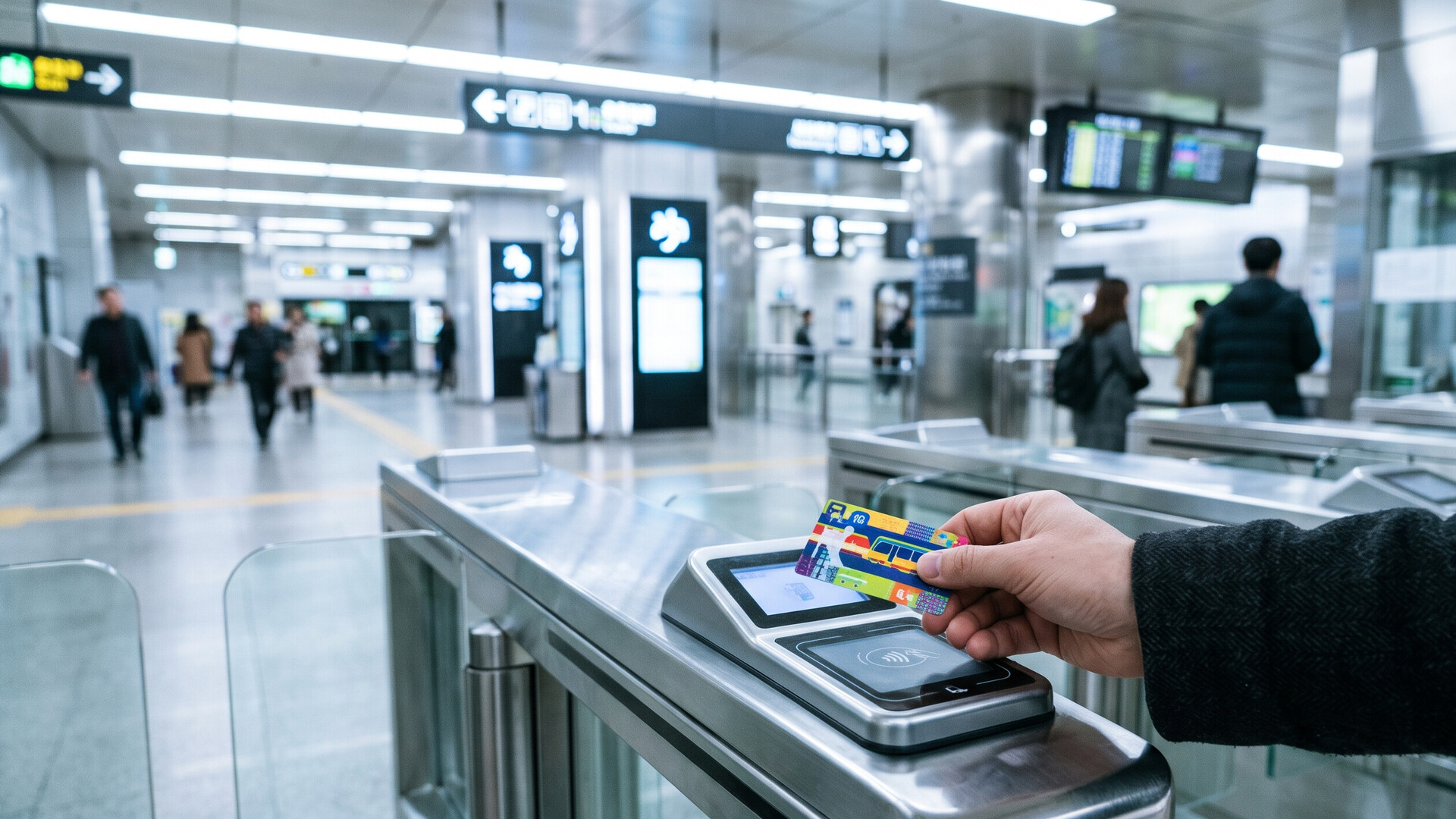
Quick Verdict (TL;DR):
The Seoul Climate Card (기후동행카드) is an unlimited public transit pass designed for exploring South Korea’s capital without worrying about per-ride transit fares. The physical card costs 3,000 KRW (~$2.20 USD), and foreign tourists can load short-term passes: 1-day (5,000 KRW), 2-day (8,000 KRW), 3-day (10,000 KRW), 5-day (15,000 KRW), or 7-day (20,000 KRW). If you ride the subway or bus 3 or more times a day, you break even immediately.Important Catch: You cannot start your journey at Incheon International Airport using this pass (though you can tap out at Incheon Airport when traveling from Seoul). Privately run lines like the Shinbundang Line, regional express buses, and subway stations outside Seoul’s municipal borders are not covered.
1. What is the Seoul Climate Card?
Introduced by the Seoul Metropolitan Government, the Climate Card (Gihoo Donghaeng Card / 기후동행카드) was initially rolled out as a revolutionary eco-friendly commuter initiative to encourage public transit use. While local residents frequently rely on the standard 30-day monthly plan, Seoul introduced dedicated Short-Term Tourist Passes (외국인 관광객 단기권) tailored specifically for international visitors and short-stay travelers.
With a single loaded card, you enjoy completely unlimited rides across Seoul’s vast subway network, city buses, and even the city’s shared bike system (Ttareungi), plus up to 50% off admission at major cultural attractions like the Seoul Botanic Park and Seoul Science Center.
Why Foreign Tourists Need the Physical Card
Local Koreans can activate the Climate Card digitally on Android devices via mobile banking or transit apps. However, foreign tourists must use the physical card (실물카드) for two key reasons:
- No Mobile Support for Foreigners: Digital activation requires a Korean resident registration number (ARC) or domestic mobile phone carrier authentication, alongside a Korean bank debit/credit card.
- Apple Wallet Limitations: Apple iOS does not currently support open NFC transit emulation for Korean transit cards. iPhone users must use a physical card regardless of nationality.
Fortunately, picking up and loading a physical Climate Card takes only a couple of minutes once you arrive in central Seoul.
2. Pricing Breakdown & Break-Even Analysis
The standard single adult subway fare in Seoul is 1,400 KRW (using standard T-Money balance) for journeys under 10 km, with small incremental distance surcharges beyond that. Seoul city bus fares range from 1,200 KRW to 1,500 KRW.
Here is the complete pricing structure for the Climate Card Tourist Pass options alongside the monthly commuter pass:
| Pass Type | Price (KRW) | Approx. USD | Daily Cost (KRW) | Break-Even Rides / Day | Best For |
|---|---|---|---|---|---|
| 1-Day Pass | 5,000 KRW | ~$3.70 USD | 5,000 KRW | 4 rides / day | Layover tours & packed marathon sightseeing |
| 2-Day Pass | 8,000 KRW | ~$5.90 USD | 4,000 KRW | 3 rides / day | Weekend city breaks |
| 3-Day Pass | 10,000 KRW | ~$7.40 USD | 3,333 KRW | 2–3 rides / day | Most popular 72-hour tourist itinerary |
| 5-Day Pass | 15,000 KRW | ~$11.10 USD | 3,000 KRW | 2–3 rides / day | Standard 5-day holiday in Seoul |
| 7-Day Pass | 20,000 KRW | ~$14.80 USD | 2,857 KRW | 2 rides / day | In-depth exploration & relaxed pacing |
| 30-Day Pass (Transit Only) | 62,000 KRW (55,000 KRW Youth) | ~$46.00 USD | 2,067 KRW | ~45 rides / month | Digital nomads, language students, long stays |
| 30-Day Pass (+ Ttareungi) | 65,000 KRW (58,000 KRW Youth) | ~$48.00 USD | 2,167 KRW | ~47 rides / month | Long-term residents using shared bicycles |
(Note: Travelers aged 19–39 qualify for the Youth Discount on the 30-day pass of 55,000 KRW / 58,000 KRW.)
The Math: Is It Worth It for You?
Consider a realistic sightseeing day in Seoul:
- Leg 1: Hotel in Hongdae → Gyeongbokgung Palace (Subway Line 2 to Line 3): 1,400–1,550 KRW
- Leg 2: Gyeongbokgung → Insadong / Ikseon-dong Hanok Village (Bus): 1,500 KRW
- Leg 3: Insadong → Seongsu-dong Cafe Street (Subway Line 2): 1,400–1,550 KRW
- Leg 4: Seongsu → Dongdaemun Design Plaza for night shopping (Subway Line 2): 1,400–1,550 KRW
- Leg 5: Dongdaemun → Hotel in Hongdae (Subway Line 2): 1,400–1,550 KRW
Total regular cost: ~7,500 KRW.
With a 3-Day Pass (daily cost ~3,333 KRW) or a 5-Day Pass (daily cost 3,000 KRW), you save over 50% on transit in a single day! Even if you make a quick stop to drop shopping bags at your hotel before heading out to dinner, every additional hop is completely free.
3. Where to Buy & How to Reload at Subway Kiosks
Acquiring and activating your Climate Card requires two simple steps: buying the blank physical card, then topping it up with your chosen pass duration at an automated subway kiosk.
Step 1: Where to Buy the Physical Card (3,000 KRW)
The physical card costs a one-time non-refundable fee of 3,000 KRW (cash or card depending on the retailer). You can purchase it at:
- Seoul Tourism Plaza Tourist Information Center: Located near Cheonggyecheon stream (Jongno-gu).
- Myeongdong Tourist Information Center: Situated directly opposite Euljiro 1-ga Station.
- Customer Safety Rooms (고객안전실): Located inside Seoul Subway Stations on Lines 1 through 8. Walk up to the station master’s office and ask for the card.
- Convenience Stores Near Subway Stations: Participating branches of GS25, CU, 7-Eleven, and Emart24 located within or immediately adjacent to Seoul metro stations.
💡 Local Stock Tip: Convenience stores in high-traffic tourist areas (like Myeongdong, Hongdae, and Seoul Station) frequently sell out of physical Climate Cards by mid-afternoon. If one store is out of stock, check the Customer Safety Room inside the station or visit a convenience store 1–2 blocks away from the station entrance. You can politely ask the clerk:
“Gihoo Donghaeng Card silmul-kadeu isseoyo?” (기후동행카드 실물카드 있어요? / Do you have physical Climate Cards?)
Step 2: How to Load Your Tourist Pass at a Subway Kiosk
Once you have the physical card in hand, head down to any Seoul subway station ticketing hall.
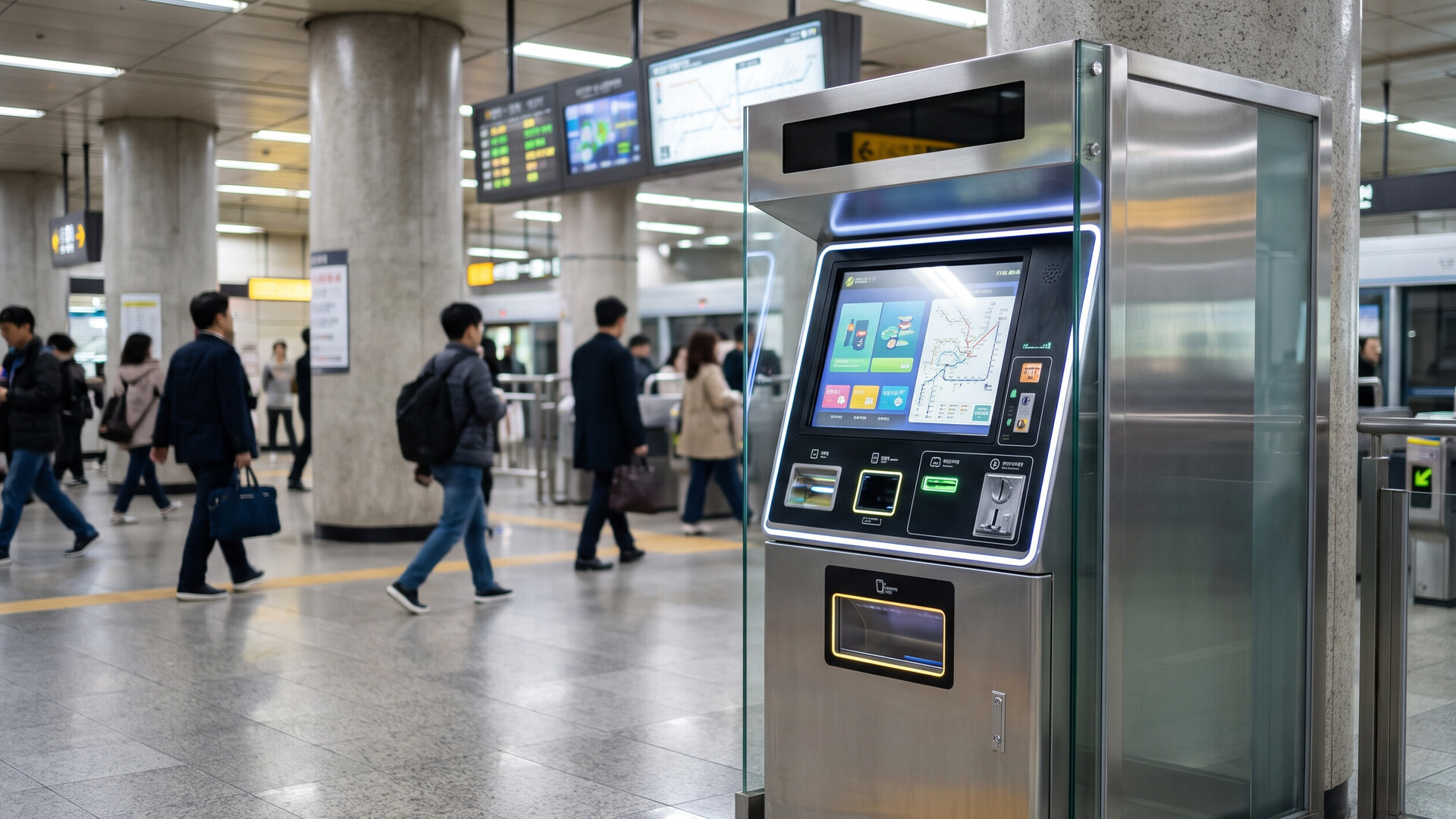
Follow these exact steps at the Ticket Vending and Card Reload Device (교통카드 무인충전기):
- Change Language: Tap English (or Japanese/Chinese) in the bottom corner of the main touchscreen.
- Place Card on Cradle: Place your physical Climate Card onto the designated RFID reader pad (the transparent card cradle). Keep it there throughout the process.
- Select Climate Card Service: On screen, tap “Recharge Climate Card” (or “Issue/Recharge Tourist Pass”).
- Choose Your Pass Type: Select your preferred duration: 1-Day, 2-Day, 3-Day, 5-Day, or 7-Day Tourist Pass (or the standard 30-day option).
- Set Your Starting Date: The machine lets you choose when the pass becomes active. You can set it to start immediately today, or schedule it to start up to 5 days in advance.
- Payment: Choose your payment method. You can pay with Korean Won banknotes (cash) or with credit/debit cards (newer kiosks accept Visa, Mastercard, and JCB).
- Complete & Collect Receipt: Do not remove the card until the screen confirms the reload is finished. Take your card and keep the printed receipt for your records.
4. Transit Coverage Map & Crucial Exceptions
The Climate Card is generous, but its boundary rules are strictly enforced by automated turnstiles. Understanding where it works—and where it fails—prevents confusing gate alarms.
What is 100% Covered (Unlimited Travel)
- Seoul Subway Lines 1 through 9: All stations physically located within the Seoul municipal boundary.
- Light Rail Transit Lines: The Sillim Line and Ui-Sinseol Line.
- Regional Lines (Seoul Sections):
- Gyeongui-Jungang Line (Susaek ↔ Yangwon / Seoul Station)
- Suin-Bundang Line (Cheongnyangni ↔ Bokjeong)
- Gyeongchun Line (Cheongnyangni ↔ Sinnae)
- Airport Railroad (AREX): The urban Seoul section between Seoul Station and Gimpo International Airport (including Gongdeok, Hongik University, and Digital Media City).
- Seoul Municipal City Buses:
- Blue buses: Trunk routes operating across major arterial roads.
- Green buses: Feeder routes and neighborhood branch lines.
- Maeul buses: Local village mini-buses connecting residential alleys to subway hubs.
- Night buses (N-Buses): Late-night buses operating from 11:30 PM to 6:00 AM.
- Ttareungi (Seoul Shared Bicycles): Unlimited 1-hour rentals during your pass validity period (paired via the Ttareungi mobile app).
Critical Exceptions & Pitfalls (What is NOT Covered)
⚠️ Turnstile Warning: Attempting to exit an excluded station or line will trigger a red turnstile light and an error alarm. You will need to press the “Help” button and pay the fare difference in cash to the station attendant.
- The Shinbundang Line (DX Line):
- STRICTLY EXCLUDED. The Shinbundang Line connects Gangnam and Sinsa to Pangyo and Suwon. Because it is privately operated and levies an independent private surcharge, the Climate Card cannot be used at all.
- Incheon International Airport (AREX Boarding Rule):
- Cannot Board at Incheon Airport: You cannot tap into the AREX station at Incheon Airport (Terminal 1 or Terminal 2) using a Climate Card. You must pay with a T-Money card, WOWPASS, or single-journey ticket to travel into Seoul.
- Can Disembark at Incheon Airport: Since late 2024, the Seoul transit authority introduced an airport drop-off exception. If you board the AREX All-Stop Train inside Seoul (e.g., at Seoul Station or Hongik Univ) with an active Climate Card, you CAN tap out at Incheon Airport T1 or T2 with no additional fee!
- Subway Stations Outside Seoul:
- Any subway stop located in Gyeonggi-do or Incheon—such as Suwon, Incheon City (Incheon Metro Lines 1 & 2), Goyang/Ilsan, Seongnam/Bundang, Everland (Yongin), or Gapyeong (Nami Island)—is outside the coverage boundary.
- Red Commuter & Express Buses:
- Gwangyeok (red commuter) buses, M-buses, intercity express buses, and designated airport limousine buses (such as KAL Limousine or routes 6001/6015) are completely excluded.
5. Climate Card vs. T-Money vs. WOWPASS
Foreign travelers frequently ask whether they should get a Seoul Climate Card, a classic T-Money card, or a multi-currency WOWPASS. The optimal choice depends entirely on your travel itinerary and spending preferences:
| Feature / Criteria | Seoul Climate Card (Tourist Pass) | Traditional T-Money Card | WOWPASS All-in-One Card |
|---|---|---|---|
| Primary Purpose | Unlimited Seoul public transit | Pay-as-you-go nationwide transit | Tourist prepaid debit card + T-Money chip |
| Physical Card Cost | 3,000 KRW | 3,000 – 5,000 KRW | 5,000 KRW (membership issuance fee) |
| Pricing Model | Flat rate (5,000–20,000 KRW) | Pay-per-ride (1,400 KRW base) | Pay-per-ride transit + merchant spending |
| Geographic Transit Scope | Seoul City Only (+ AREX exit at ICN) | Nationwide (Seoul, Busan, Jeju, Daegu) | Nationwide transit (via built-in T-Money) |
| Shinbundang Line Access | ❌ Excluded | ✅ Supported | ✅ Supported |
| Boarding at Incheon Airport | ❌ Cannot tap in at airport | ✅ Supported on all AREX trains | ✅ Supported on all AREX trains |
| Merchant Payments | ❌ Transit only (no shopping/dining) | ⚠️ Convenience stores & select bakeries | ✅ Accepted at 100% of Korean card terminals |
| Foreign Currency Reload | ❌ KRW cash/cards only | ❌ KRW cash only at kiosks | ✅ Top up directly with USD, EUR, JPY, SGD |
| Smartphone App Features | Physical card only for tourists | Limited balance check via NFC | Real-time balance check, currency lock, spend alerts |
| Best Travel Scenario | Staying in Seoul; taking 3+ transit rides/day | Multi-city Korea roadtrips & light transit users | Cashless travel, restaurants, shopping, and nationwide transit |
The Ultimate Travel Strategy: The Dual-Card Hack
You do not have to choose just one card! Experienced travelers use the Dual-Card Hack:
- Card 1 (Seoul Climate Card): Use this for all your daily subway, bus, and bike journeys within Seoul. Enjoy total freedom and zero hesitation when hopping between sightseeing spots.
- Card 2 (WOWPASS or Backup T-Money): Use this to take the AREX train from Incheon Airport on your arrival day, to pay for day trips to Suwon Hwaseong Fortress or Nami Island, and to swipe seamlessly at street food markets, cafes, and olive young shops without foreign exchange fees.
6. Frequently Asked Questions (FAQ)
Q1. Can I use the Seoul Climate Card from Incheon Airport to Seoul?
No. You cannot start your journey at Incheon Airport with a Climate Card because Incheon Airport’s stations are in Incheon Metropolitan City, outside the Seoul operating zone. You must use a standard T-Money card, a WOWPASS, or purchase a single-journey AREX ticket. However, when heading to the airport from Seoul, you can board at Seoul Station or Hongik Univ and exit at Incheon Airport T1/T2 using your Climate Card.
Q2. Where can I buy a physical Seoul Climate Card?
You can buy the physical card for 3,000 KRW at the Seoul Tourism Plaza (Cheonggyecheon), the Myeongdong Tourist Information Center, Customer Safety Rooms inside subway stations on Lines 1 through 8, or at convenience stores (GS25, CU, 7-Eleven, Emart24) situated inside or near Seoul subway stations.
Q3. Can two people share one Climate Card?
No. Transit cards in South Korea operate on a strictly 1-card-per-person basis. Every traveler in your party (including children over age 6) must carry their own physical card and tap in and out at every turnstile or bus door.
Q4. What happens if I accidentally take the subway outside Seoul with a Climate Card?
If you board within Seoul but ride past the municipal border into Gyeonggi-do (e.g., traveling down Line 1 toward Suwon), the exit turnstile will display an error message and refuse to open. You will need to press the station intercom button to speak with an attendant, who will calculate the fare from your boarding station and charge you in cash.
Q5. Can I use the Climate Card on an iPhone (Apple Wallet)?
No. Apple Wallet does not support Korean transit NFC protocols. Only local Android users with Korean domestic phone numbers and resident IDs can access the digital Climate Card. All international tourists visiting Seoul must use the physical card.
Q6. Does the pass expire at midnight or after 24 hours?
Tourist passes operate on a calendar-day basis rather than a rolling 24-hour clock. For example, a 1-Day Pass activated at 2:00 PM on Monday remains valid until the last train finishes service early Tuesday morning (around 1:00 AM). To get maximum value, activate your pass early in the morning!
7. Final Practical Tips for Seoul Visitors
To make your Seoul transit experience effortless, keep these four golden rules in mind:
- Always Tap Out on Buses: When riding Seoul city buses, always tap your card against the sensor when boarding and when exiting through the rear doors. Failing to tap out marks your journey as incomplete and may block transfer privileges.
- Download Naver Map or KakaoMap: Google Maps does not support walking directions or real-time transit departure integration in South Korea due to national security map export laws. Download Naver Map or KakaoMap (both offer full English UI) for pinpoint subway exit numbers and transfer car recommendations.
- Carry a 10,000 KRW Bill for Kiosks: While modern subway kiosks increasingly support international cards, older ticket machines occasionally reject foreign chip cards. Having a 10,000 or 50,000 KRW banknote guarantees a smooth top-up experience.
- Take Advantage of Ttareungi Bikes: If the weather is pleasant along the Han River or Cheonggyecheon, unlock a Seoul public bike through the Ttareungi app linked with your Climate Card for a scenic ride across the city.